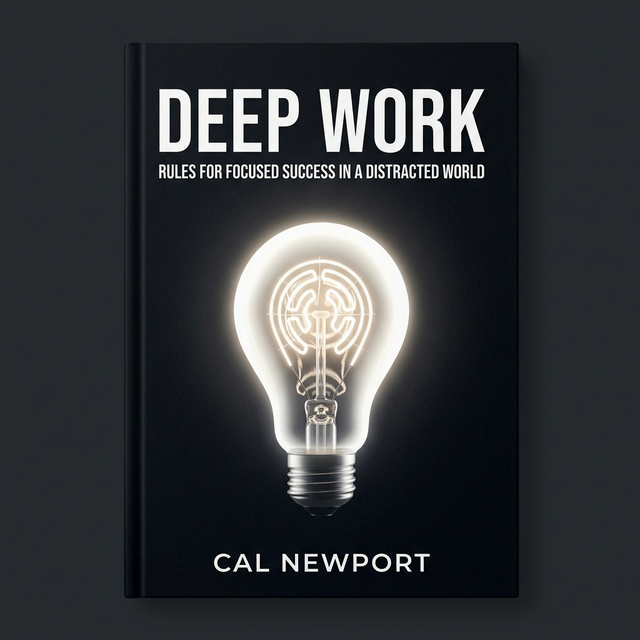
Deep Work Summary
About the Book
Cal Newport makes the case that deep, focused cognitive work — free from distraction — is the superpower of the 21st century. As shallow work (emails, meetings, social media) proliferates, those who master depth will produce rare, valuable results and find meaning in their work.
Key Lessons
- Deep work is rare, valuable, and increasingly disappearing
- The Monastic, Bimodal, Rhythmic, and Journalistic philosophies of deep work
- Schedule every minute of your day to protect depth
- Quit social media unless it provides outsized value
- Embrace boredom — trained attention is a learnable skill
Important Quotes
- Deep work is the ability to focus without distraction on a cognitively demanding task.
- Clarity about what matters provides clarity about what does not.
- A nightly shutdown ritual allows your brain to recover for the next day.
- The key is to schedule deep work like it is your most important meeting.
Chapter Summary
Deep Work Is Valuable
The new economy rewards two abilities: mastering hard things quickly and producing at elite levels. Both require sustained, uninterrupted cognitive effort — exactly what distractions systematically destroy.
Deep Work Is Rare
Open offices, instant messaging, and social media have made distraction the default. The busyness-as-proxy-for-productivity trap keeps most knowledge workers perpetually shallow.
Deep Work Is Meaningful
Craftsmen, scientists, and writers all report the same thing: deep concentration produces flow states, a sense of meaning, and satisfaction that shallow work never can. Depth is not just productive — it is fulfilling.
Rule 1 — Work Deeply
Choose your deep work philosophy: Monastic (eliminate all else), Bimodal (alternate blocks), Rhythmic (daily habit), or Journalistic (fit depth wherever you can). Add rituals, set location, and protect the blocks.
Rule 2 — Embrace Boredom
If you check your phone every time you're bored, you've trained your brain to crave stimulation constantly. Schedule boredom — resist digital distraction even outside work hours to strengthen your focus muscle.
Rule 3 — Quit Social Media
Apply the craftsman approach: only use a tool if its benefits substantially outweigh its harms. For most people, social media fails this test — the benefit is minor; the attentional cost is enormous.
Rule 4 — Drain the Shallows
Schedule every minute of your workday, even loosely. Identify and minimise shallow work (email, meetings, admin). Put a time budget on shallow activities so they do not silently expand to fill your day.