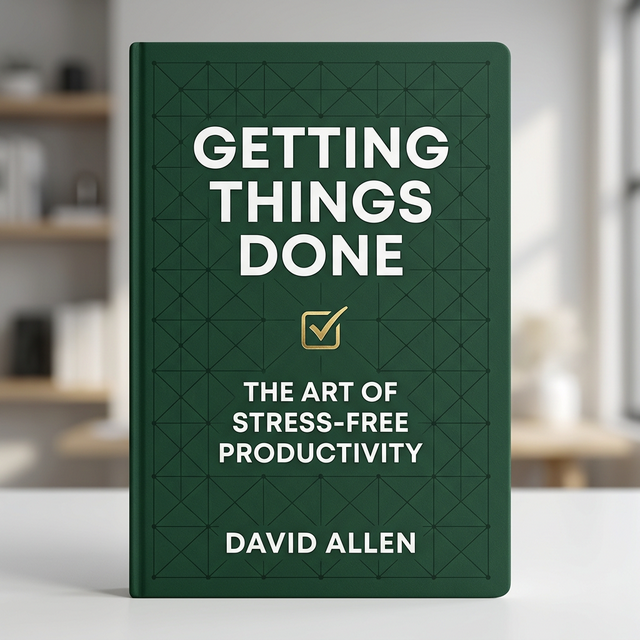
Getting Things Done Summary
About the Book
David Allen's GTD system is the gold standard for personal organisation. The core insight: your brain is for having ideas, not holding them. By capturing everything into a trusted external system, clarifying next actions, and reviewing regularly, you achieve a 'mind like water' — clear, calm, responsive.
Key Lessons
- The two-minute rule: if it takes less than two minutes, do it now
- Capture everything: nothing should live in your head
- Next action thinking: always define the very next physical step
- Weekly review is the master key to the entire system
- Projects are any outcome requiring more than one action
Important Quotes
- Your mind is for having ideas, not holding them.
- If you don't pay appropriate attention to what has your attention, it will take more of your attention than it deserves.
- The secret of getting ahead is getting started.
- Much of the stress that people feel doesn't come from having too much to do. It comes from not finishing what they've started.
Chapter Summary
A New Practice for a New Reality
The amount of information and commitments in modern life has outpaced the brain's ability to manage it. Stress comes not from too much to do, but from poorly managed agreements with yourself.
Getting Control of Your Life: The Five Stages
Capture everything. Clarify what each thing means. Organise it into the right place. Reflect through regular reviews. Engage with confidence. Each stage has specific tools and criteria.
Getting Projects Creatively Under Way
The natural planning model mirrors how the brain plans effectively: purpose, principles, vision, brainstorming, organising, identifying next actions. Most people skip steps and get stuck.
Collection: Corralling Your 'Stuff'
Every open loop — every undone task, unread email, unresolved question — drains mental energy. Capture everything into inboxes and empty them regularly to zero.
Processing: Getting 'In' to Empty
For every item: What is it? Is it actionable? If yes, do it (2 mins), delegate, or defer. If no, trash, incubate, or file as reference. Never leave something in the inbox unprocessed.
Organising: Setting Up the Right Buckets
Project lists, next-action lists, calendars, waiting-for lists, and reference files each have a distinct purpose. Keeping these separate prevents the confusion that buries important things.
Reviewing: The Art of the Weekly Review
The weekly review is the master key. Clear head, update all lists, review projects and goals, identify next actions. Without regular reviews the whole system collapses into unreliable chaos.
Doing: Making the Best Action Choices
Four criteria for choosing what to do: context (where are you?), time available, energy available, priority. GTD frees you to use these criteria rather than anxiety or habit.