Mindset Summary
About the Book
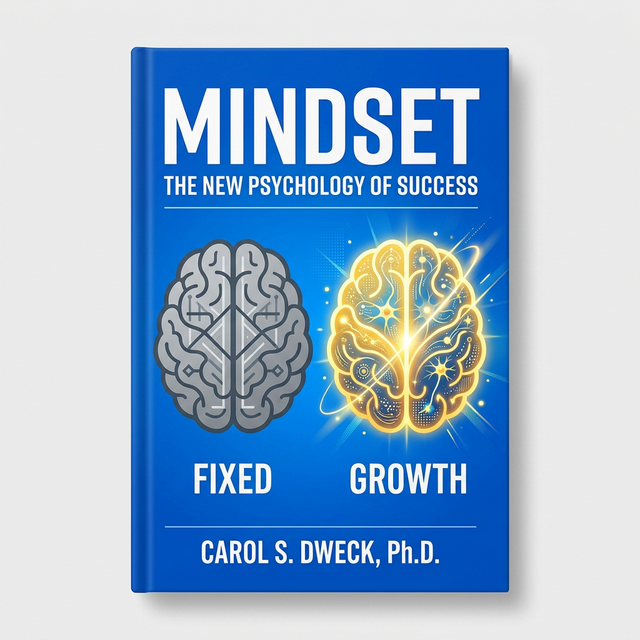
Stanford psychologist Carol Dweck's decades of research shows that the beliefs we hold about our own qualities fundamentally determine our success. People with a growth mindset (who believe abilities can be developed) consistently outperform those with a fixed mindset (who believe abilities are innate).
Key Lessons
- Fixed mindset: 'I'm either good at it or I'm not'
- Growth mindset: 'I can get better at anything through effort'
- Praising effort beats praising intelligence for children
- Failure is data, not identity — learn and grow from it
- Mindsets can be changed — neuroplasticity is real
Important Quotes
- In a growth mindset, challenges are exciting rather than threatening.
- Becoming is better than being.
- The passion for stretching yourself and sticking to it, even when it's not going well, is the hallmark of the growth mindset.
- Why waste time proving over and over how great you are, when you could be getting better?
Chapter Summary
The Mindsets
Fixed mindset: abilities are carved in stone. Growth mindset: abilities can be cultivated. This single belief drives every aspect of how people handle challenges, setbacks, and feedback.
Inside the Mindsets
Fixed-mindset people avoid challenges to preserve their self-image. Growth-mindset people seek challenges as opportunities to learn. The same event — a failure, a criticism — means completely different things to each.
The Truth About Ability and Accomplishment
Neither raw talent nor IQ predicts success as well as relentless effort. Dweck shows — through decades of studies — that praising intelligence creates fragility, while praising effort creates resilience.
Sports: The Mindset of a Champion
The greatest athletes (Jordan, Ali, Wooden) embraced failures as learning. Many talented athletes with fixed mindsets plateaued or fell apart under pressure because they needed to look good more than grow.
Business: Mindset and Leadership
Fixed-mindset CEOs surround themselves with yes-people and blame externally. Growth-mindset leaders build learning organisations. Companies reflect the mindset of the person at the top.
Relationships: Mindsets in Love and Friendships
Fixed-mindset people expect relationships to be perfect effortlessly. Growth-mindset people see relationships as something to work on and improve. Conflict is not a sign of incompatibility — it's an opportunity to communicate.
Parents, Teachers, and Coaches
Every word a parent or teacher uses sends a message about what is valued. 'You're so smart' creates fixed mindset; 'You worked really hard on that' creates growth mindset. The language we choose shapes children's entire relationship with learning.
Changing Mindsets
Mindsets are not fixed — they can be changed with awareness and practice. Recognise your fixed-mindset voice, understand what triggers it, talk back to it, and take the growth-mindset action instead.