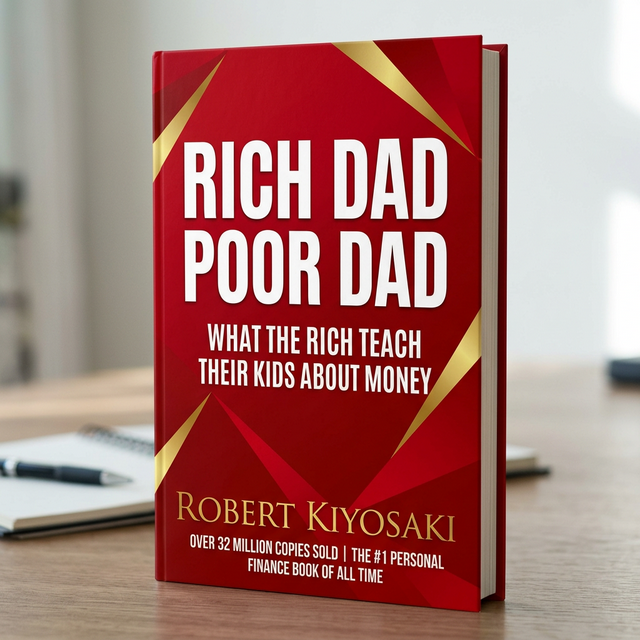
Rich Dad Poor Dad Summary
About the Book
Kiyosaki contrasts his biological father (Poor Dad, educated, employee mindset) with his friend's father (Rich Dad, business owner mindset). The central lesson: the rich don't work for money — money works for them. Financial education, assets vs liabilities, and entrepreneurship are the real keys to wealth.
Key Lessons
- Assets put money IN your pocket; liabilities take money OUT
- The rat race: earn → spend → earn → spend, never building wealth
- Buy assets that generate cash flow, not liabilities that feel like assets
- Financial literacy is never taught in schools — teach yourself
- Mind your own business: your real business is your asset column
Important Quotes
- The poor and middle class work for money. The rich have money work for them.
- An asset puts money in my pocket. A liability takes money out of my pocket.
- It's not how much money you make, but how much money you keep.
- Rich people acquire assets. The poor and middle class acquire liabilities that they think are assets.
Chapter Summary
Rich Dad, Poor Dad
Two father figures, two completely different philosophies about money and work. One saw a job as security; the other saw a job as a stepping stone to building assets. The difference in outcomes was enormous.
The Rich Don't Work For Money
Most people work for money out of fear and greed. The rich work to learn and to build systems. Fear keeps the poor working; greed keeps them spending. Breaking this emotional cycle is the first step.
Why Teach Financial Literacy?
An asset puts money IN your pocket. A liability takes money OUT. Your house is very likely a liability, not an asset. This simple redefinition is the most important financial lesson most people never learn.
Mind Your Own Business
Keep your job if you need to, but start building your own asset column alongside it. Real businesses, investment properties, stocks, intellectual property — assets that generate cash flow while you sleep.
The History of Taxes and the Power of Corporations
The rich use legal entities (corporations) to reduce tax exposure. Earn, spend, then pay tax (corporate) vs earn, pay tax, then spend (employee) — the asymmetry compounds enormously over a lifetime.
The Rich Invent Money
Opportunity isn't found — it's made. Financial intelligence (accounting, investing, markets, law) gives you the ability to see deals others don't see. Money is an idea, not a thing.
Work to Learn — Don't Work For Money
Seek jobs that teach you important skills — sales, communication, investing, management. The most dangerous advice is 'specialise': well-rounded financial intelligence is what builds wealth.